|
 |
|
CoolStuff
Newsletter Article
Vol. 8, April 2003
Chemistry:
Gas Laws Smorgasborg |
|
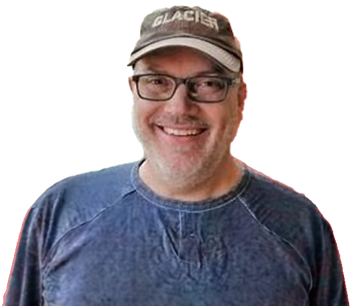
With a Special Contribution from Patti Carlson ~ New
Trier High School, Winnetka IL.
In this issue we welcome the contributions
of Patty Carlson, Chemistry Teacher and colleague from New Trier High
School and we continue with the discussion of the Learning Cycle from
the last issue of CoolStuff. The activities
that follow represent the
exploratory phase of the learning cycle
approach. These activities introduce students to the behavior of
gases in different situations so that they may draw their own
conclusions before being given formal instruction in gas laws. For the
complete story on the "Learning Cycle" phases,
click here.
~ Chris Chiaverina
One of the challenges of teaching
chemistry is making the invisible world seem real and relevant to our
students. Labs present the best opportunity to demonstrate this, but
too often we, out of necessity, begin each lab with a litany of
“don’ts” (don’t eat food in the lab, don’t touch the acids, don’t look
at the bright light being given off, etc) and it is rather rare that
the material we study in chemistry lends itself to an experiential
approach. I put this lab together because I was so inspired by Chris’
“smorg” concept. I wanted to see if I could generate the same kind of
enthusiasm and elicit the “ah-ha” moments from my chemistry kids as he
routinely does with his physics students.
The active engagement with
the phenomena in this lab is important in helping students confront
their own preconceptions and or misconceptions and allows them to test
their personal theories. The hardest part is resisting the temptation
to give students the “answers” because they are so excited and get
deeply involved in developing such interesting (read wacky)
explanations.
The fun of watching the kids jump up, shouting a Seinfeldian “Get out!” when someone actually breaks a meter stick in
two, listening to the surprised shrieks of students who successfully
propel a potato slug across the room and watching happy students munch
popcorn while they try to figure out why the kernels pop are all worth
the extra set-up time you’ll need to devote to this lab. Give a few
kids some mole money (extra credit) to stay after school and help you
clean up. Have fun!
Patty |
|
Gas Laws Smorgasbord
|
|
Station 1 The
Cartesian Diver
Key Concept ~
When the pressure on a gas is increased, its volume will decrease.
Set up a
Cartesian diver in a soda bottle. Fill the bottle with water all the
way to the top. Fill the diver with just enough water so that it
barely floats on the surface. When the bottle is squeezed, the
pressure increases on the air trapped in the diver. When the density of the air (gas) changes (increases), the diver sinks to the bottom (whether the bottle is sealed or not).
Releasing the bottle releases the pressure.
Instructions:
The "diver" is the little
tube half-filled with water inside the large plastic bottle.
Note the position of the diver inside the bottle as the bottle sits on
the table.
Questions:
Now, squeeze the plastic bottle.
What happens to the
diver?
Now, take your hands
off the bottle. What does the diver do now?
What do you think causes the diver to
behave this way?
|


|
|
 |
Station 2 Microwave
Popcorn
Key Concept
~ When the temperature of a gas is increased, its volume will
increase.
Students will be micro waving small
amounts of popcorn in a clear bowl. Popcorn pops when the moisture
inside boils and expands, bursting the kernel open.
Instructions:
Place about two
tablespoons of popcorn in the clear plastic bowl. Put the top on the
bowl and place in the microwave. Close the microwave door and turn the
microwave on high. Watch as closely as you can as the popcorn
kernels begin to pop, but of course DO NOT OPEN THE DOOR! As soon as
the vigorous popping stops, turn off the microwave.
Questions:
Describe what you see (yeah, I know, but
try).
What do you think
makes the popcorn pop?
Put your popcorn in
a paper bag and then squirt in some butter if you wish. |
|
Station 3 Balloon and the Flask (or
Hot Air Ballooning)
Key
Concept ~ When the temperature of a gas is
increased, its volume will increase.
Place 10 mLs. or so
of water in an Erlenmeyer flask. Stretch an un-inflated balloon over
the mouth of the flask (250 mL. flask).
Place the
flask next to a hot plate with a thermal (oven) glove so that students
can move the flask easily from the hot plate to the ice water.
Students will see how an increase in temperature can cause in increase
in the volume of a gas.
Instructions:
Place flask on hot
plate and let water boil.
Questions:
What happens to the balloon? Why?
Now, put the flask in a beaker of ice and let it cool.
Now what does the balloon do? Why? |

Photo from University of Wisconsin
Chemistry Department
|
|

 |
Station 4 Life in
a Vacuum!
Key
Concept ~ When the pressure on a gas decreases,
its volume will increase.
This station can use a large vacuum
chamber or the small vacuum chamber and Vacuum Pumper shown. Provide
a balloon with a small amount of air tied inside. The balloon needs
to be small enough that it won't seal against the sides of the
chamber. Students will observe an increase in volume when they
decrease the pressure in the chamber.
Instructions:
Observe as a
partially inflated balloon is placed inside a Vacuum Chamber, in which
the air is slowly evacuated. To do this, simply drop
the balloon into the chamber. Place the lid
and hand pump on the top and
pump the air out. Repeat with a marshmallow and shaving cream.
IMPORTANT: clean up your mess!!!!!
Questions:
What happens to all of these objects?
Why do you suppose
this behavior occurs? |
|
Station 5 Iron Man
(a.k.a. Magdeburg Hemispheres)
Key
Concept ~ The earth's atmosphere exerts pressure
on objects.
Students will observe the strength of
atmospheric pressure in this memorable demonstration.
Instructions:
Take the two black
rubber cups and slap them together quickly with a lot of force. Now,
try to pull them apart using the handles. Ask a friend to pull one end
and you pull the other.
Questions:
Can you pull them
apart? Why or why not?
Now, "burp" the cups, i.e., allow air to come in the center by peeling
the sealed cups from each other.
Now what happens? Why?
|
 |
|

Water
is colored and in a clear beaker for photo. Never let students drink
from beakers!

|
Station 6 This Sucks!
I'm under so much pressure!
(Impossible...Science CAN'T suck!)
Key
Concept ~ The earth's atmosphere exerts
pressure on objects.
This station has a
few steps. It's important that
you assure that students
follow the progression of tasks as laid out. This helps build the
acquired knowledge to make the final conclusions.
Hopefully, students won't spill any water, but it might be a good idea
to set up this station over a sink. Also make sure each student uses
a dry card.
Instructions:
Pour some tap water
into one of the cups provided. Obtain a straw and sip some water.
Why does this work?
Now, suck up some water and place your index finger over the top of
the straw. Lift the straw out of the cup.
What happens? What
causes the water to remain in the straw?
Fill a Styrofoam cup
brim full (overflowing) and place an index cards securely on top. Make
sure there is good contact between the card and lip of cup. Now,
gently turn the cup sideways.
What happens to the water?
Now, gently turn the cup upside down
and carefully let go of the card.
What happens to the water now? How is this possible? |
|
Station 7 Mass a
Gas
Key
Concept ~ Air is a form of matter and has mass
that can be measured.
Along with understanding atmospheric
pressure, students can discover that air has mass. As shown in the
photo, a liquid crystal temperature strip can be added to show the
rise in temperature when the bottle is pressurized.
Instructions:
Attach a Pressure
Pumper to an empty two-liter
pop bottle. Measure the mass
of the bottle to at least the nearest 0.1 gram. Record the mass
below.
Pump the pressure pumper 200 times
and record the mass of the bottle again.
Questions:
What happened?
Why did the mass change?
Remove the Pressure Pumper and record
the mass of the bottle again. Explain what happens.
|


|
|

I didn't use meter sticks
for this because of cost constraints. I used pieces of scrap wood
having meter stick dimensions. Also, the student-performed meter stick
Karate demo could be potentially risky. Students can get overly
exuberant when performing this demo with possible harm to themselves
and those around them. I would suggest that a warning or perhaps that
students be supervised when carrying out this activity. Safety Glasses
are a must. |
Station 8 Ruler of the World!
Key Concept
~ The earth's atmosphere exerts pressure on objects.
This is another demonstration of the
strength of atmospheric pressure. Students won't believe that the air
is stronger than they are! Note: The meter stick will break.
Breaking a meter stick makes this activity really memorable, but you
might want to use another thin piece of wood.
Instructions:
Take a meter stick and place it on a desk
so that it extends a bit over the desk. Place two full sheets of
newspaper over the section of the meter stick that remains on the
desk. Smooth the newspaper out several times so it lies on the table
as flat as possible.
Questions:
Now, try to karate chop the meter stick. What happens?
Why were you able to do that?
Why is the newspaper important?
|
|
Station 9 Super Duster
& Office Buster
Key
Concept ~ When the volume of a gas increases,
its temperature will decrease.
Obtain a can of compressed "air," such as those used to clean
electronic equipment. As you depress
the nozzle, the gas inside (typically an HFC) responds to the reduced
pressure by "boiling" or rapidly turning into a gas.
This is an
endothermic process so the can gets extremely cold (can even cause
frost-bite if you hold it too long.) I like the students to relate
this to the phenomenon of water boiling at lower temperatures at high
altitudes due to the lower pressure. (Lots of campers know this very
well.)
The
classic Drinking Bird uses a similar concept and makes a good
companion to this station. Simply challenge the students to explain
the bird's motion.
Instructions:
Wrap your hand around one of the duster cans. Make sure your palm is
in complete contact with the can. Now, depress the nozzle.
Questions:
What do you feel? Why?
Shake the can. What do you notice?
Try
to explain what happens when you depress the nozzle.
|

Information on the Drinking Bird
 |

For Java applets
distributed on this web page
Copyright (C) 1998 Michael Fowler mf1i@virginia.edu
Dr. Michael Fowler
Physics Building
University of Virginia
Charlottesville, VA 22901
|
Station 10 Computer Terminal ~ Have
an Applet!
Key Concept
~ When the pressure on a gas increases, its temperature will
increase.
Load the applet from
the link below. It has a one-dimensional model of a gas under
pressure.

Instructions:
Watch the single gas
molecule in the applet. Hit the red “compress” button to lower the
piston.
Questions:
What happens to the volume as the piston is lowered? Why?
What happens to the atom velocity as the piston is lowered?
What happens to the temperature as the piston is lowered?
Now, hit the red “expand” button. What happens to the atom velocity
and temperature?
What is going on here? Try to explain in your own words.
|
|
Station 11 Nice shot Spud!
Key Concept
~ Pressure and volume are inversely related. The volume of a gas
decreases as the pressure that the gas exerts increases.
The potato launcher is great for demonstrating
this concept because there is a section of trapped gas between
the two potato chunks that gets increasingly compressed as the dowel
pushes one chunk nearer the other. Eventually the pressure being
exerted on the plug end chunk becomes so great that it is fired out of
the "launcher". If a good seal is not made when loading the potato
pieces the launcher won't work. Caution**
Be sure to demonstrate this station to students first and warn
against pointing the launcher at anyone! (under penalty of bodily
torture to the Perp!)
Instructions:
"Stamp" a plug of potato with each end of the Potato Launcher tube.
Use the plunger to firmly push one plug into the tube. Try to aim the
other plug at the target. Do NOT aim the launcher at a person!
Questions:
What happened?
Why did/didn't it work?
Push the plunger all the way through to empty the launcher for the
next group.
|


Slip a large washer on to the dowel and use the duct
tape to secure. This forms a good hand protector when pushing the
plunger in.
|
|
Ok the
smorgasbords'
done...what now?
After the gas laws
exploratory activity, the teacher must decide how to best help
students make sense out what they just encountered in the laboratory.
Along the way, basic principles, terminology, and mathematical
relationships must be introduced.
(See
Concept Development)
One way to accomplish these objectives is to use lecture
demonstrations to drive the concept development. Lecture
demonstrations allow the teacher to revisit the phenomena introduced
by the exploratory stations in an engaging way.
Many times students miss some important aspect of an activity.
Therefore, it is often good for the teacher to repeat some of the
activities done by the students as class demonstrations. In this way
the teacher can focus student attention on the essential element of
selected activities. Drawing on students to explain what they see and
why they think it happens gets them actively involved in a communal
learning process while allowing the teacher to assess understanding.
In addition to revisiting smorgasbord activities, the teacher can
further amplify basic principles through the use of novel
demonstrations. These demonstrations may be used further clarify
concepts and illustrate real-world applications of the basic
principles being studied.
The demonstrations described below should be performed by the
teacher. The use of hot and very cold objects prohibits hands-on
student involvement. Furthermore, students should wear safety glasses
when these demonstrations are being performed by the teacher.
|

Photo from University of Wisconsin
Chemistry Department |
Dry Ice Ballooning
Put on thermal
gloves. CAREFULLY break off a piece of dry ice and place inside an
un-inflated balloon. Pinch the balloon closed and wait a few minutes.
Questions:
What happens?
Explain.
|
|
Egg over easy!
Pour 7-10 mls. of water into an Erlenmeyer
flask (1000 mL. flask) . Place on hot plate, let water boil away. Immediately after the
water has boiled off, remove from heat (remember to use thermal
gloves!) and place a well-greased, hard-boiled egg on the mouth of the
flask. Observe. After students have
had a chance to answer the questions, ask for a volunteer to try to
get the egg back out.
Questions:
What happens to the egg? Why?
Propose a way to get the egg out of
the flask without cutting it.
Describe the method you saw used to
get the egg out.
|

Photo from University of Wisconsin
Chemistry Department |
|

Photo from University of Wisconsin
Chemistry Department
Click here
to see
the "Ultimate
Crashed Can Demo"
|
You Can Do it!
Place
about 7-10 mls of water in the empty pop can. Place can on hot plate
and turn heat on high to let the water boil off (the length of time
will vary) After the water has evaporated, immediately grasp the can
with thermal (oven) gloves and invert it into the beaker of cold
water.
Questions:
What happens to the can? Why?
Why was it important to put water in the can before heating it?
Watch what happens when the can is lifted out of the water. Explain
your observations.
|
|
Here's an idea for keeping students minds
on topic even after they leave your classroom. It might even get them
to see other events in real life that help make the connection to new
knowledge. |
|
Video Clips
(Extra Credit)
Check out the movies “Total Recall”
and “License to Kill” . See if
you can locate the scene's that would apply to these questions.
In Total Recall, what is happening to Arnold when his helmet cracks? Why?
In License to Kill, what happens to the bad guy’s head in the pressure chamber? Why? |
 |
|
Our next
smorgasbord will take your students on a journey through the world of
light, color and perception. By way of hands-on experiments and
take-home devices, they will learn how light is produced, beamed,
blocked, bounced and bent. Your students will discover what it takes
to become invisible, how sound may be carried on a light beam, and why
the myriad colors on a television screen are really just in your head.
Through some visual foolery, your students will experience the
perceptual paradoxes that occur when the brain is unable to make sense
of sensation. When they complete the color and light smorgasbord,
they may find that they have found a new way of "seeing the light."
Regards,
 |
|
Next Issue:
Light & Color (Can you really see the light?) |
|
|
|
About Patty Carlson:
I have known and worked with
Patty Carlson for over a decade and feel privileged to teach
and grow with her. Patty is an energetic, creative, and
caring professional who has earned the respect of her
students and the admiration of her colleagues. She relates
well to students, knows her subject inside and out, and is
enthusiastic about sharing her knowledge with others. Patty
is intrigued by the simplest things, which, I believe,
explains her success. She seems more fascinated with the
natural world around her each day and she shares this
growing sense of wonder with her students.
Patty's creativity is evident in her teaching. The lessons,
laboratory activities, and field experiences she has
prepared for her students are as effective as they are
unique. Emphasizing a constructivist approach, Patty allows
her students to develop their own worldview through
interactive experiences both in and outside the classroom.
She is convinced that a solid conceptual foundation is a
prerequisite for understanding. Whenever possible, she takes
her students beyond the confines of the school to perform
fieldwork. Such activities stress higher-level thinking
skills as well as demonstrate the application of science in
the real world.
Chris
Chiaverina |
|
Subscription information
You have received this email as a customer of Arbor Scientific, because you
have opted into the newsletter mail list, or because you have requested
information from Arbor Scientific. We would love to hear from you, and find
out what you think of our newsletter "Cool Stuff". You can click on the link
below to leave your comments, receive messages tailored to your interests,
and update your profile at
http://www.arborsci.com
/Customer_Service.aspx .
To unsubscribe click here:
unsubscribe
To send this email to a friend just click on the link
and
include the email address in the body of the message:
Send Now
Email addresses will not be shared with third parties.
© 2009 Arbor Scientific
|
|
|