
Education Center
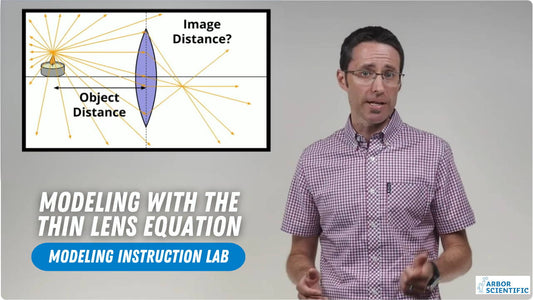
Modeling with the "Thin Lens" Equation
Walk through a lab activity that will allow students to derive the Thin Lens Equation from experimental data
Modeling with the "Thin Lens" Equation
Walk through a lab activity that will allow students to derive the Thin Lens Equation from experimental data
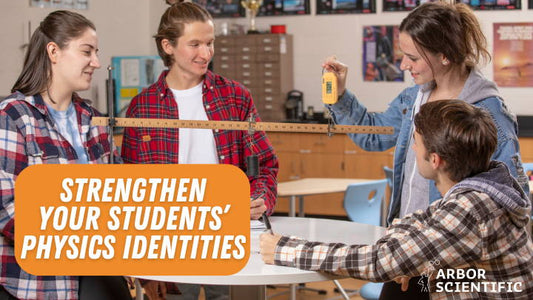
Strengthening Your Students' Physics Identities
Read how Bree Barnett-Dreyfuss uses the Everyday Actions Guide to promote positive change for students "who have been historically excluded from physics."
Strengthening Your Students' Physics Identities
Read how Bree Barnett-Dreyfuss uses the Everyday Actions Guide to promote positive change for students "who have been historically excluded from physics."

A Teacher's Guide To The New Arbor Precision Air Powered Projectile
Take your classroom outside to confirm concepts in projectile motion while allowing your students to "feel like true experimental physicists"
A Teacher's Guide To The New Arbor Precision Air Powered Projectile
Take your classroom outside to confirm concepts in projectile motion while allowing your students to "feel like true experimental physicists"
STEM in The Classroom: A New Approach
New strategies put students at the center of the experience and allow them to make real-world connections with project-based learning.
STEM in The Classroom: A New Approach
New strategies put students at the center of the experience and allow them to make real-world connections with project-based learning.

What Can You Do With A Physics Degree?
Learn about a new lesson that helps students understand what a future in physics might look like.
What Can You Do With A Physics Degree?
Learn about a new lesson that helps students understand what a future in physics might look like.
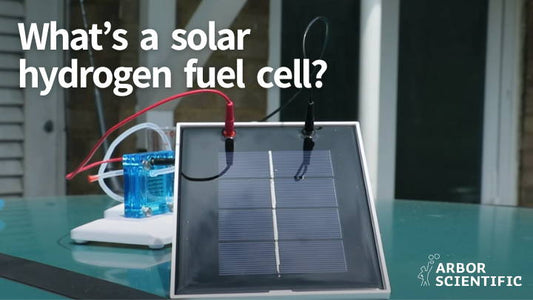
What Is A Solar Hydrogen Fuel Cell?
Solar Hydrogen Fuel Cells are transforming the way we capture, store, and convert energy. Learn about the "greenest" fuel cells and how they work.
What Is A Solar Hydrogen Fuel Cell?
Solar Hydrogen Fuel Cells are transforming the way we capture, store, and convert energy. Learn about the "greenest" fuel cells and how they work.

4 Ways to Refresh Your Practice This Summer
Marianna Ruggerio suggests four ways that you can use time in the Summer to balance, rejuvenate your mind, and refresh the joy in your craft.
4 Ways to Refresh Your Practice This Summer
Marianna Ruggerio suggests four ways that you can use time in the Summer to balance, rejuvenate your mind, and refresh the joy in your craft.
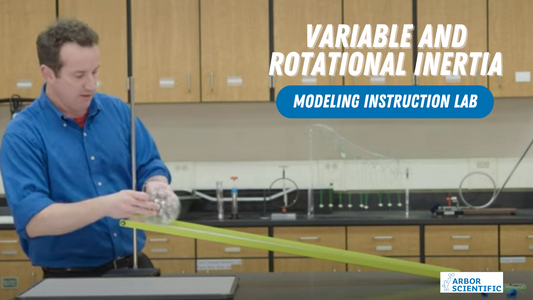
Exploring Rotational Inertia
James Lincoln performs a variety of possible experiments to explain how mass and distance affect rotational inertia, variable inertia, and torque.
Exploring Rotational Inertia
James Lincoln performs a variety of possible experiments to explain how mass and distance affect rotational inertia, variable inertia, and torque.
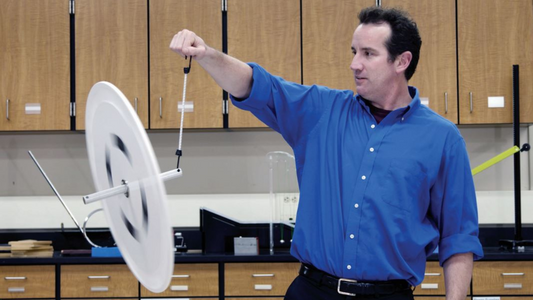
A Better Gyroscope Wheel
James Lincoln, a high school physics teacher, uses a modernized Gyroscope Wheel to illustrate the concepts of precession and rotational inertia.
A Better Gyroscope Wheel
James Lincoln, a high school physics teacher, uses a modernized Gyroscope Wheel to illustrate the concepts of precession and rotational inertia.
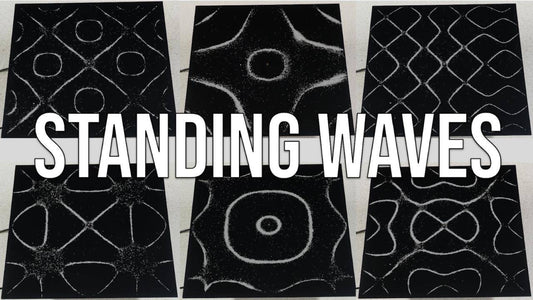
Standing Waves
In this article, Aaron Debbink walks you through a digital resource that gives students a conceptual understanding of “standing waves”.
Standing Waves
In this article, Aaron Debbink walks you through a digital resource that gives students a conceptual understanding of “standing waves”.
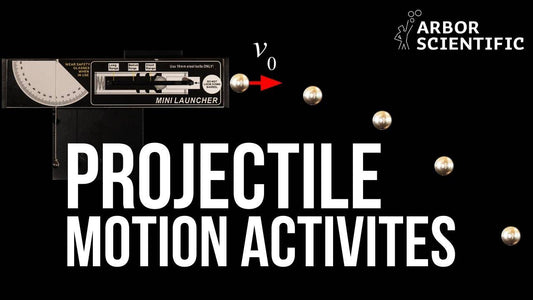
Investigating Projectile Motion in a Controlled Environment
This CoolStuff post walks you through an investigation for students to learn about projectile motion and several different lab challenges you can do with your students related to projectile motion.
Investigating Projectile Motion in a Controlled Environment
This CoolStuff post walks you through an investigation for students to learn about projectile motion and several different lab challenges you can do with your students related to projectile motion.
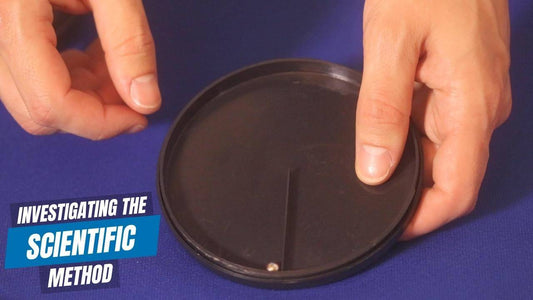
Investigating the Scientific Method: A Better Black Box
Leverage a unique low-tech approach that allows students to leave their first day of class with the memorable experience of creating a model to explain their hypothesis.
Investigating the Scientific Method: A Better Black Box
Leverage a unique low-tech approach that allows students to leave their first day of class with the memorable experience of creating a model to explain their hypothesis.
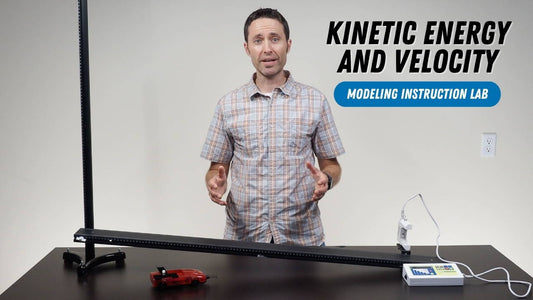
Kinetic Energy and Velocity
Walk through an introductory physics lab that allows students to develop a model for the relationship between an object’s kinetic energy and velocity.
Kinetic Energy and Velocity
Walk through an introductory physics lab that allows students to develop a model for the relationship between an object’s kinetic energy and velocity.
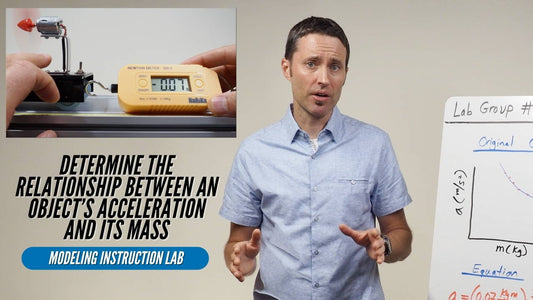
Forces and Motion
Follow an introductory physics lab that allows students to develop a model of the relationship between an object’s acceleration and its mass using Newton’s 2nd law of motion.
Forces and Motion
Follow an introductory physics lab that allows students to develop a model of the relationship between an object’s acceleration and its mass using Newton’s 2nd law of motion.
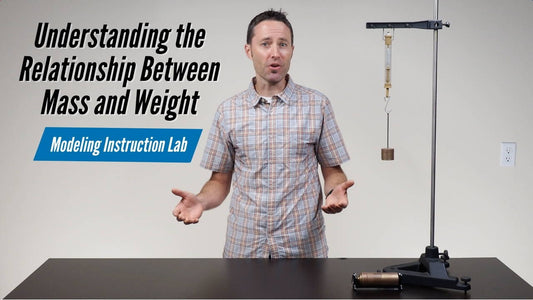
Understanding the Relationship Between Mass and Weight
Utilize a modeling method to help students differentiate between Mass and Weight
Understanding the Relationship Between Mass and Weight
Utilize a modeling method to help students differentiate between Mass and Weight
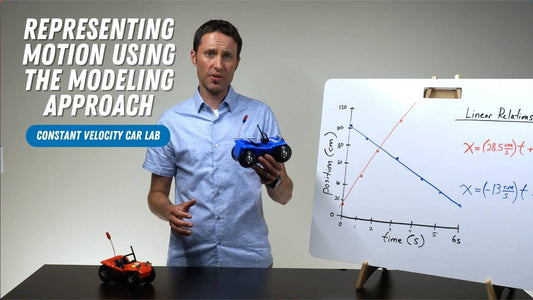
Representing Motion (Constant Velocity)
An easy way to introduce students to some of the different representations of motion is to have them investigate the motion of a Constant Velocity Car.
Representing Motion (Constant Velocity)
An easy way to introduce students to some of the different representations of motion is to have them investigate the motion of a Constant Velocity Car.


